dark shadows
Senon Williams · Francesca Bifulco · Gegam Kacherian · Sara Ajami · John Geary
April 18 - May 30, 2026
Los Angeles, CA — CMAY Gallery is pleased to present Dark Shadows, a group exhibition exploring the darker, more surreal dimensions of narrative painting. Drawing inspiration from the iconic television series Dark Shadows (1966–1971)—and its later reinterpretation in Tim Burton’s stylized film Dark Shadows—the exhibition brings together a diverse group of artists whose works navigate themes of mythology, memory, transformation, and the uncanny.
Originally airing from 1966 to 1971, Dark Shadows introduced audiences to a world where gothic romance intertwined with the supernatural. Burton’s later adaptation amplified this sensibility through a heightened visual language of dark humor, theatricality, and exaggerated atmosphere. Together, these iterations provide a conceptual framework for the exhibition, where melodrama and the otherworldly converge, and narrative becomes a vehicle for psychological and symbolic exploration.
The artists in Dark Shadows each approach this terrain through distinct cultural and aesthetic lenses:
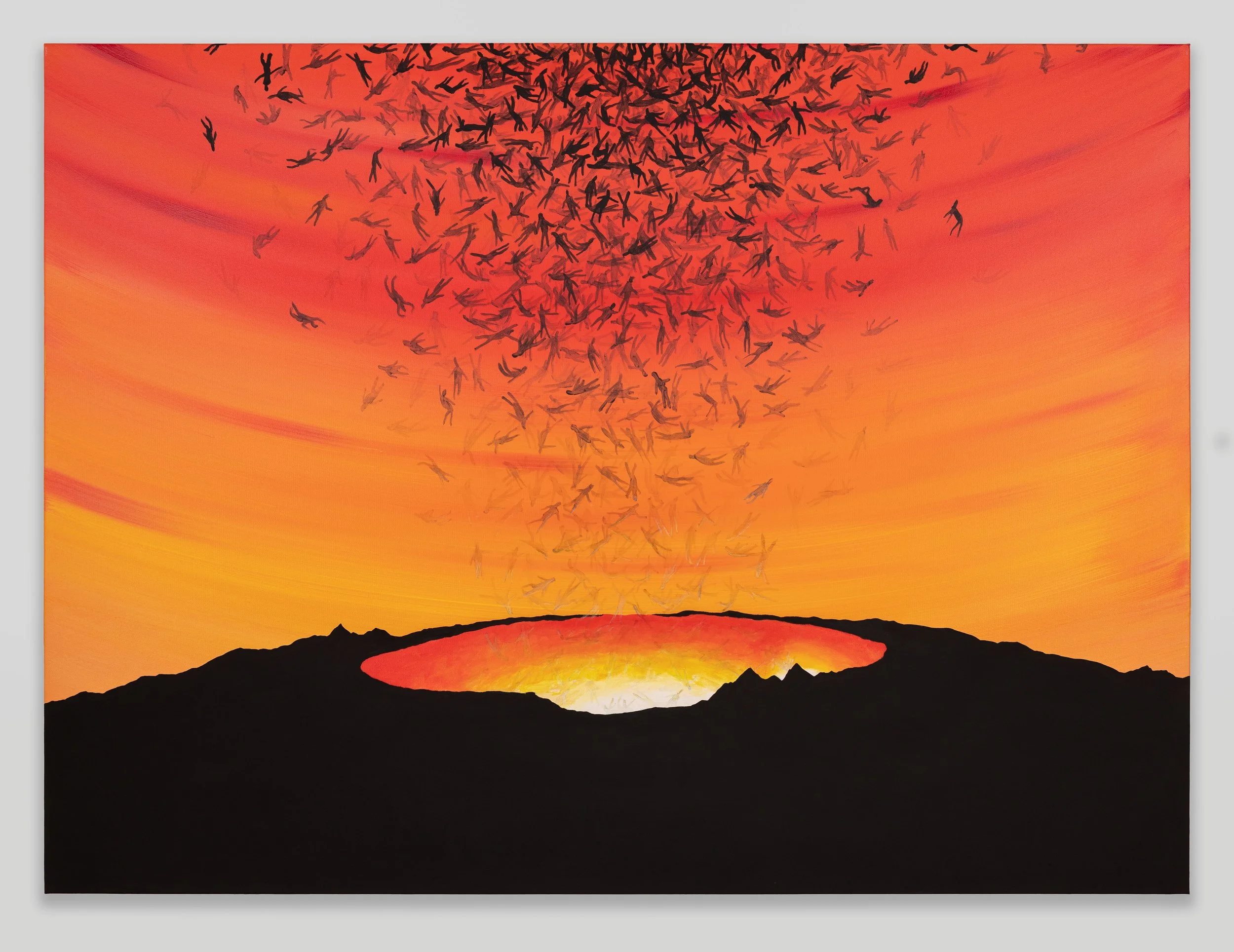
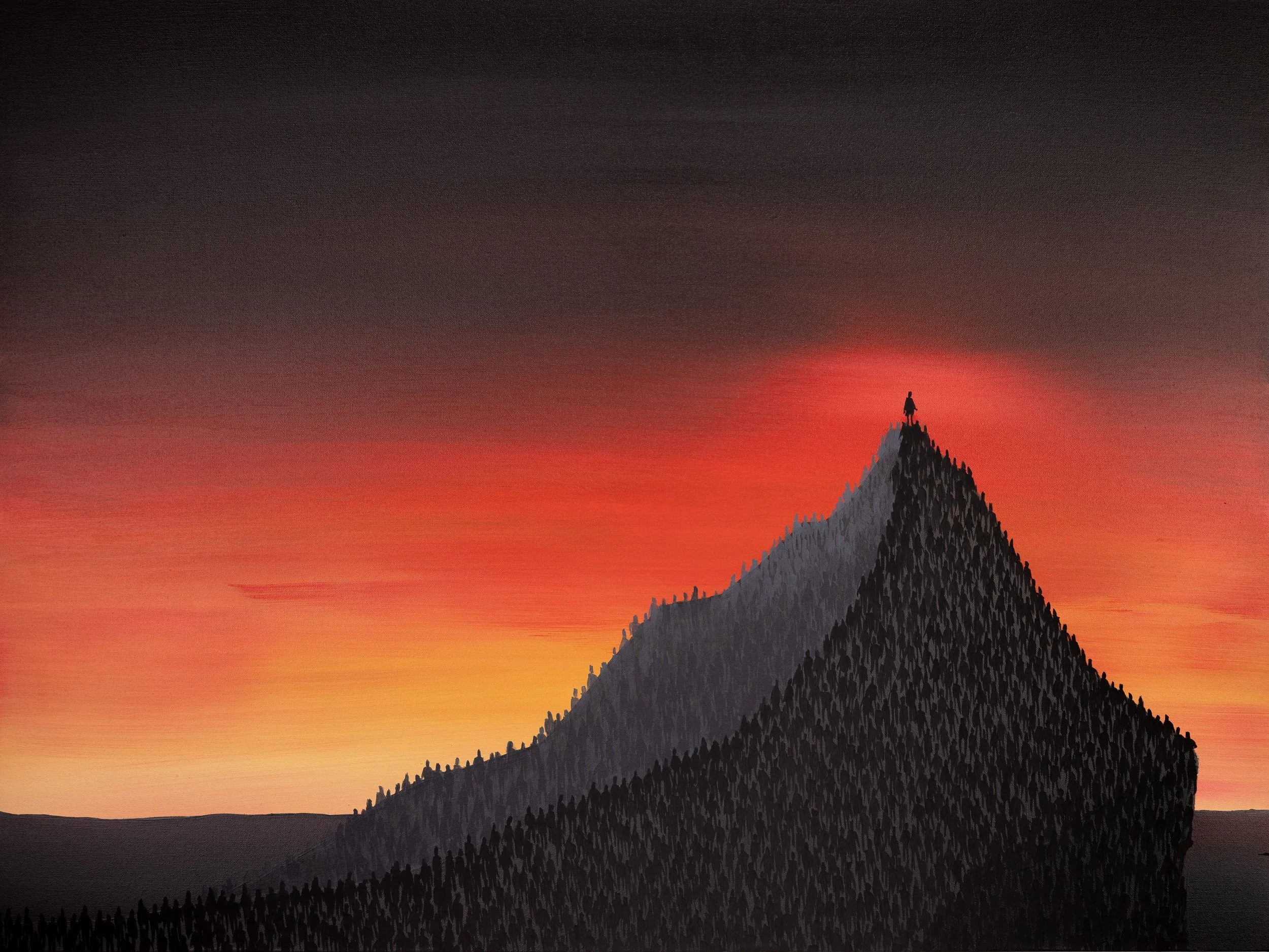
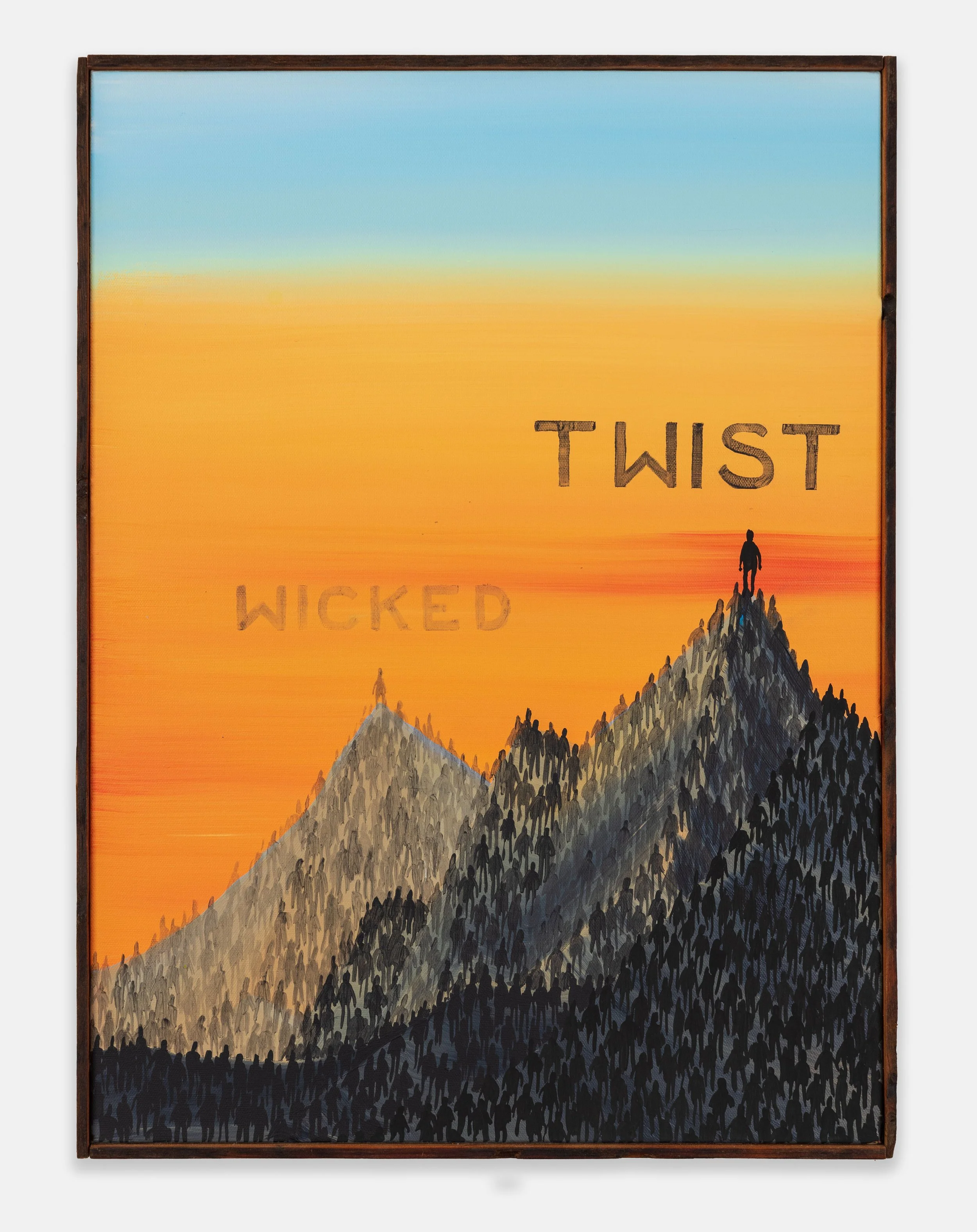
Senon Williams, a Los Angeles–based visual artist and musician, draws from his multicultural background to create atmospheric works that merge folklore with contemporary experience. Often incorporating text directly into his compositions, his narratives unfold through both image and language. In more recent works, Williams introduces clusters of small figures that not only serve the narrative but also accumulate to form elements within the landscape—such as hills or mountains—blurring the boundary between figure and environment. In this exhibition, his works also include single and multiple figures positioned on mountaintops, as well as groups falling from the sky into an active volcano. Working across ink, watercolor, and acrylic, his paintings evoke layered explorations of identity, nature, and social transformation.
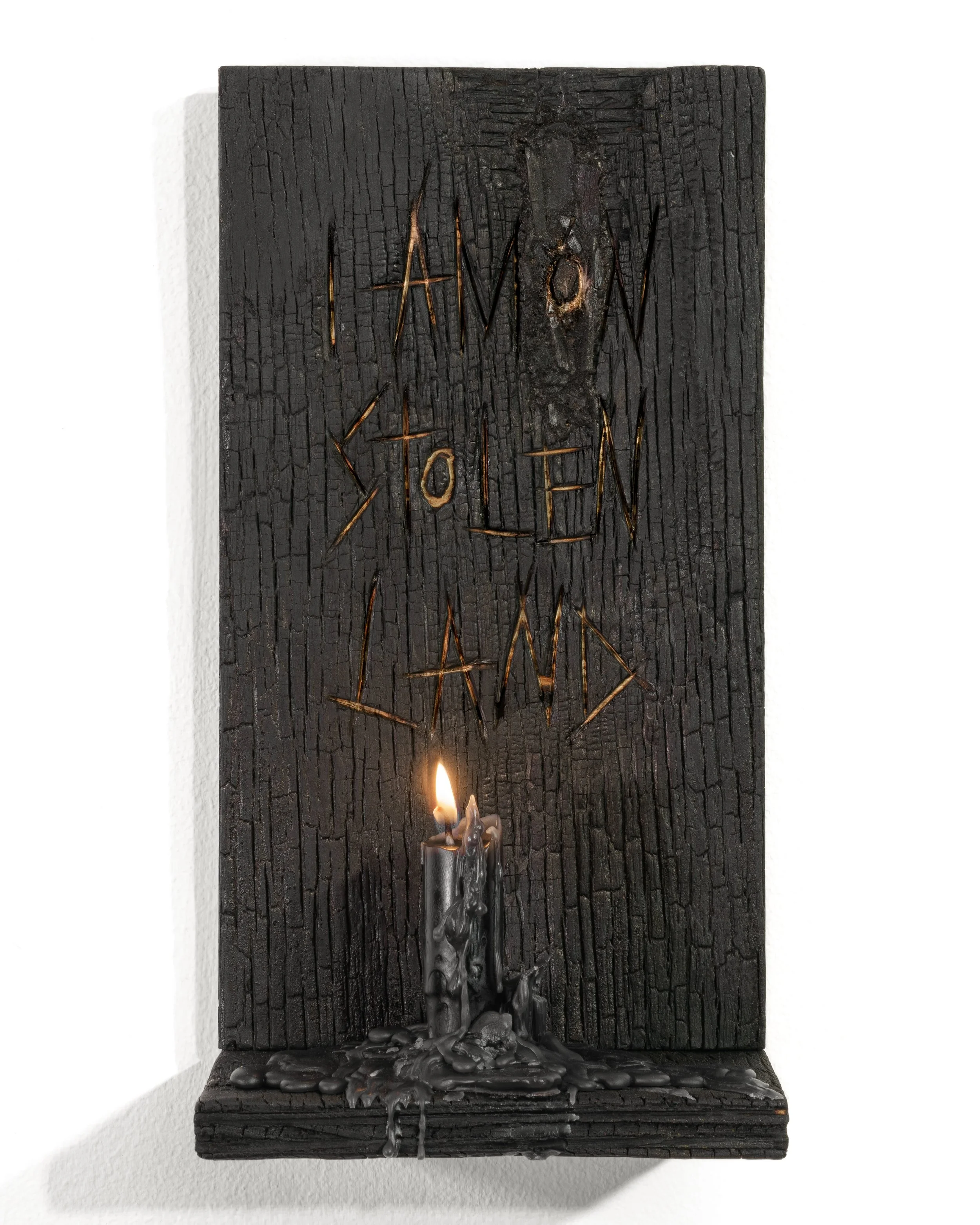
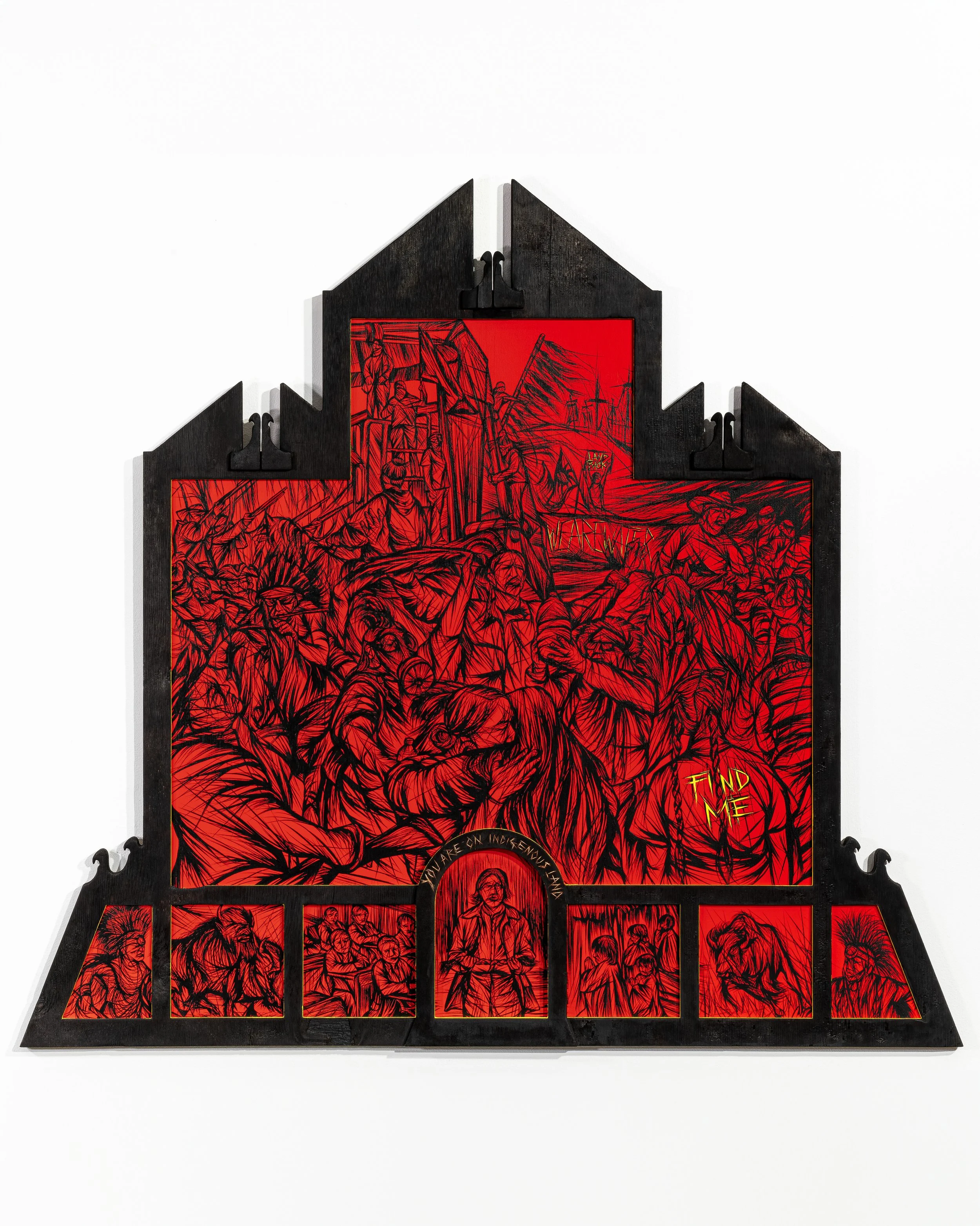
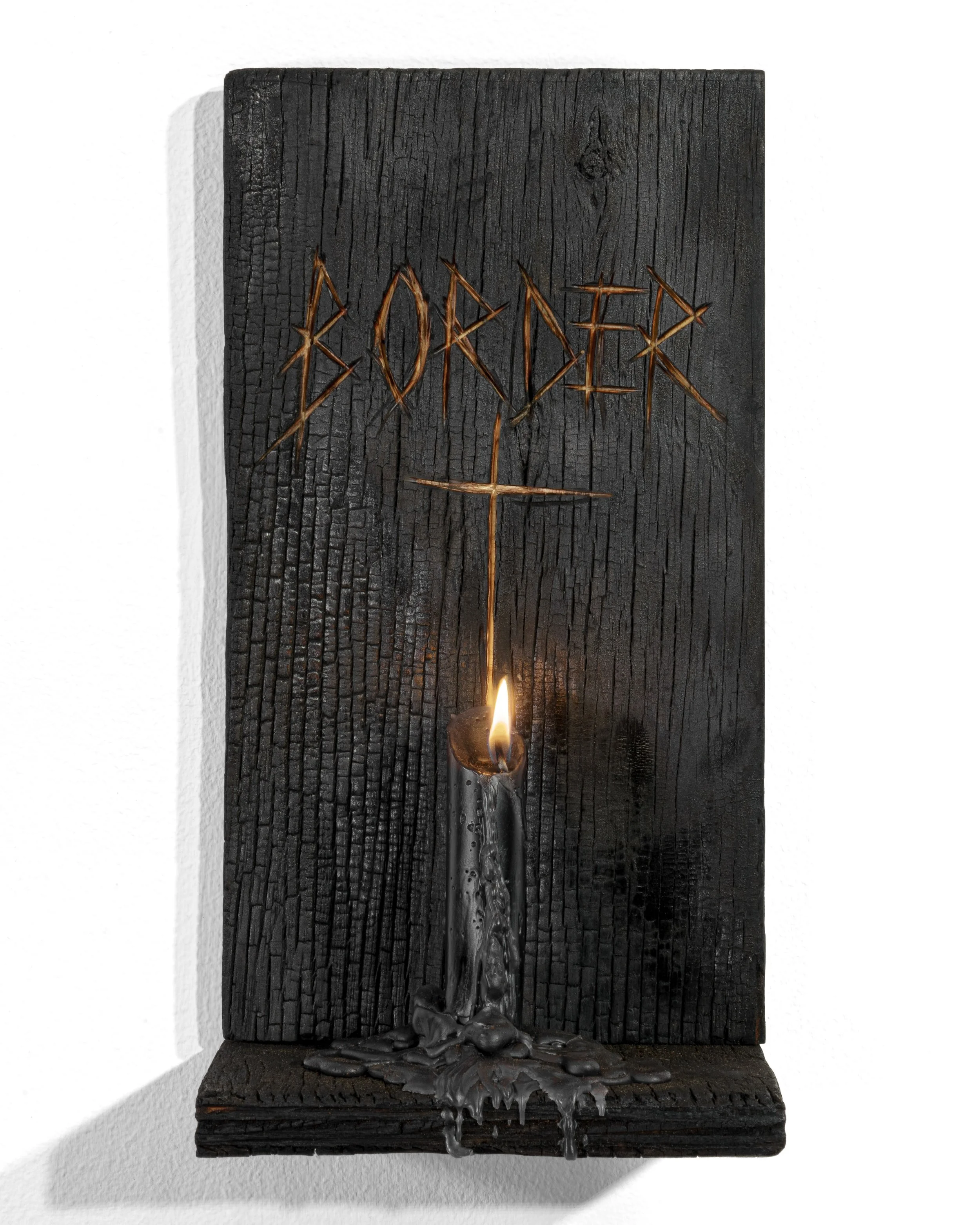
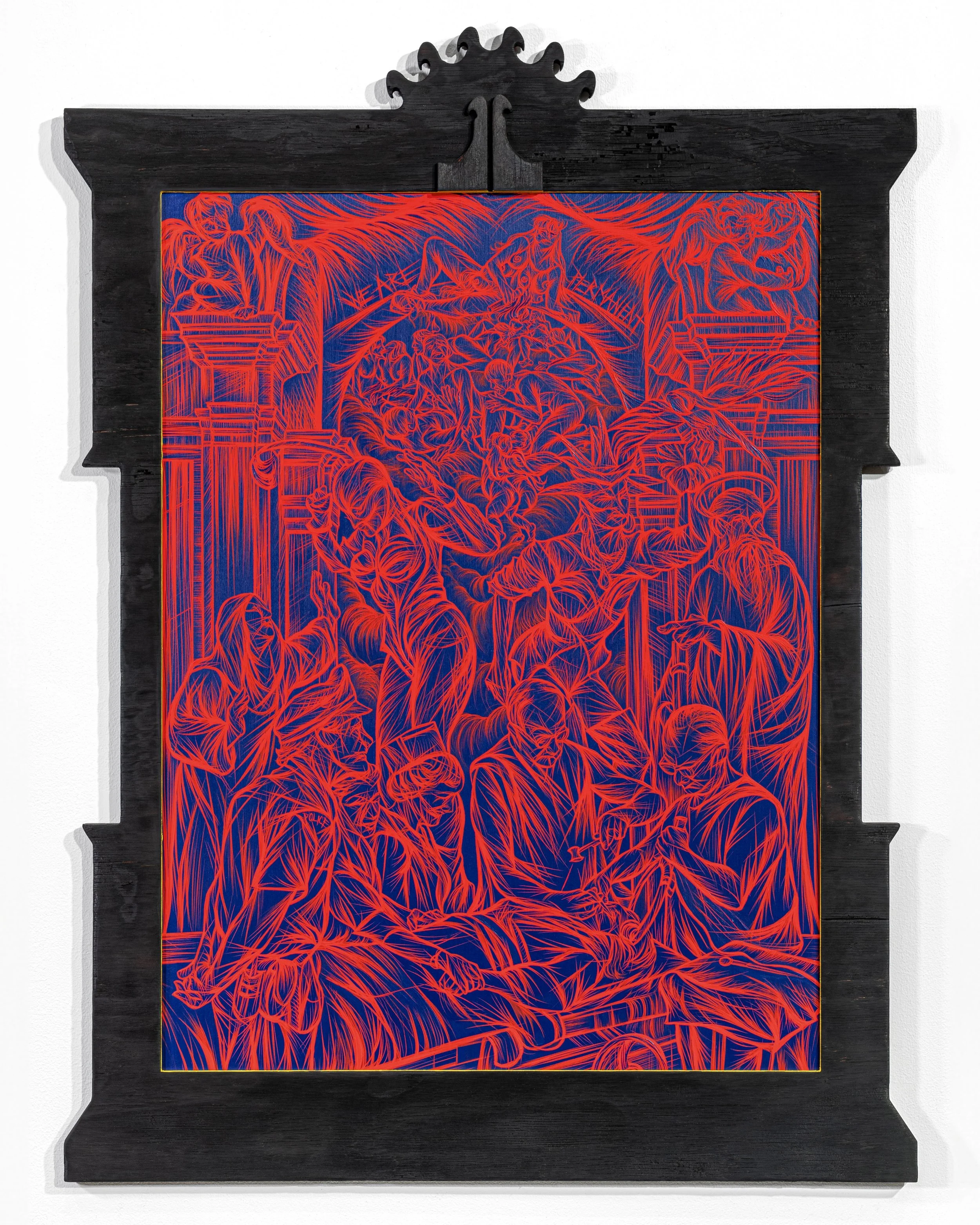
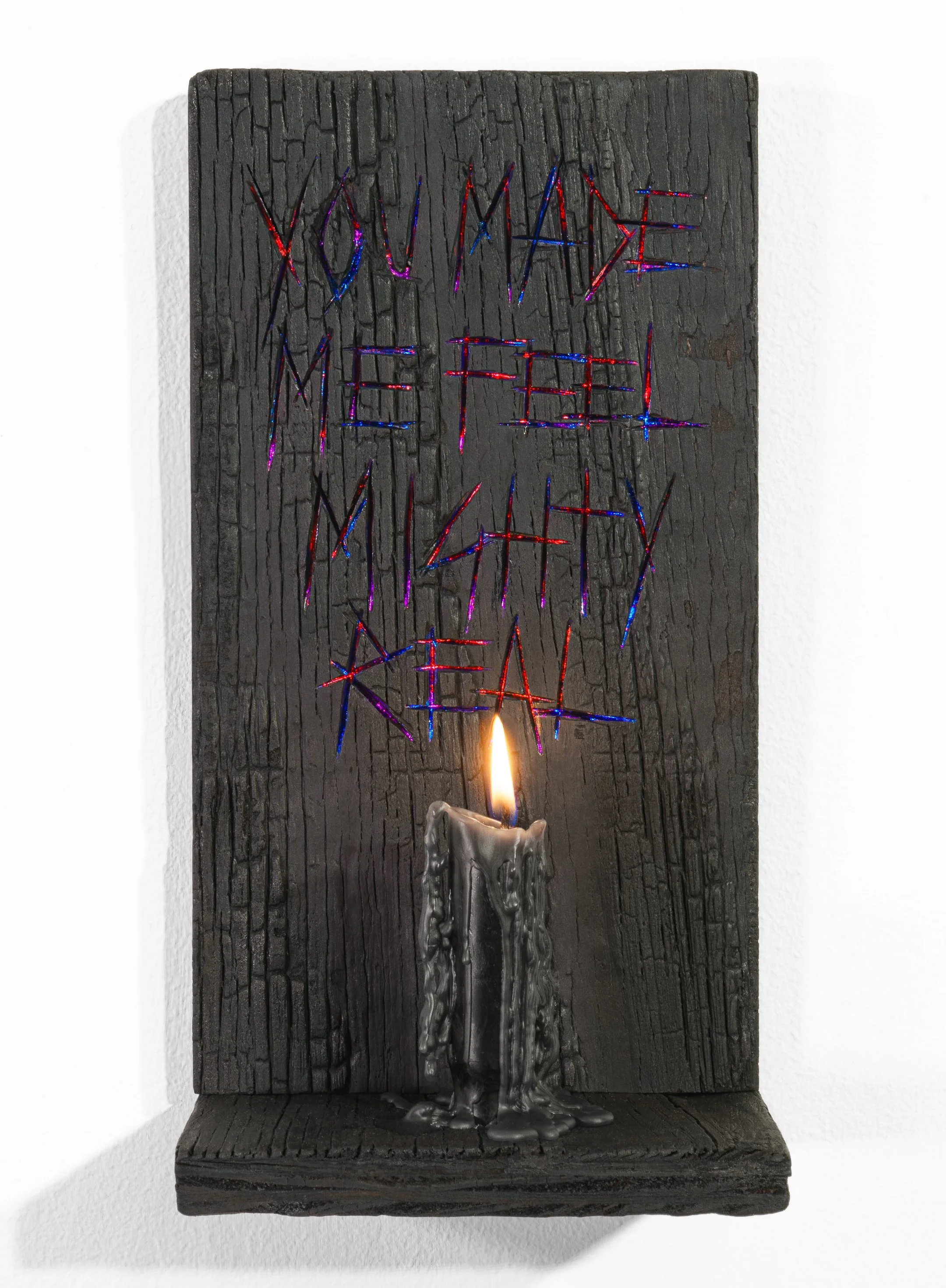
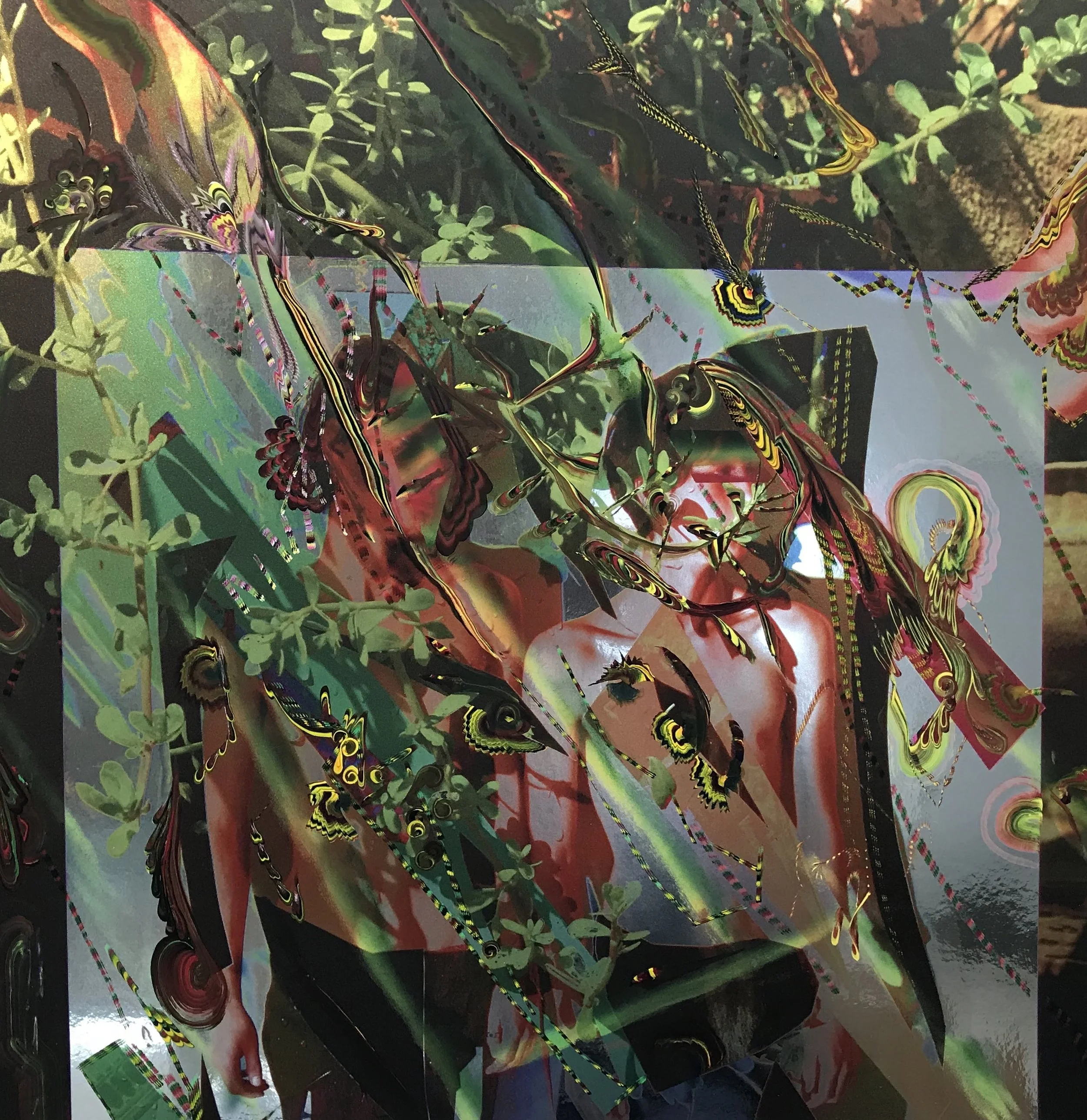
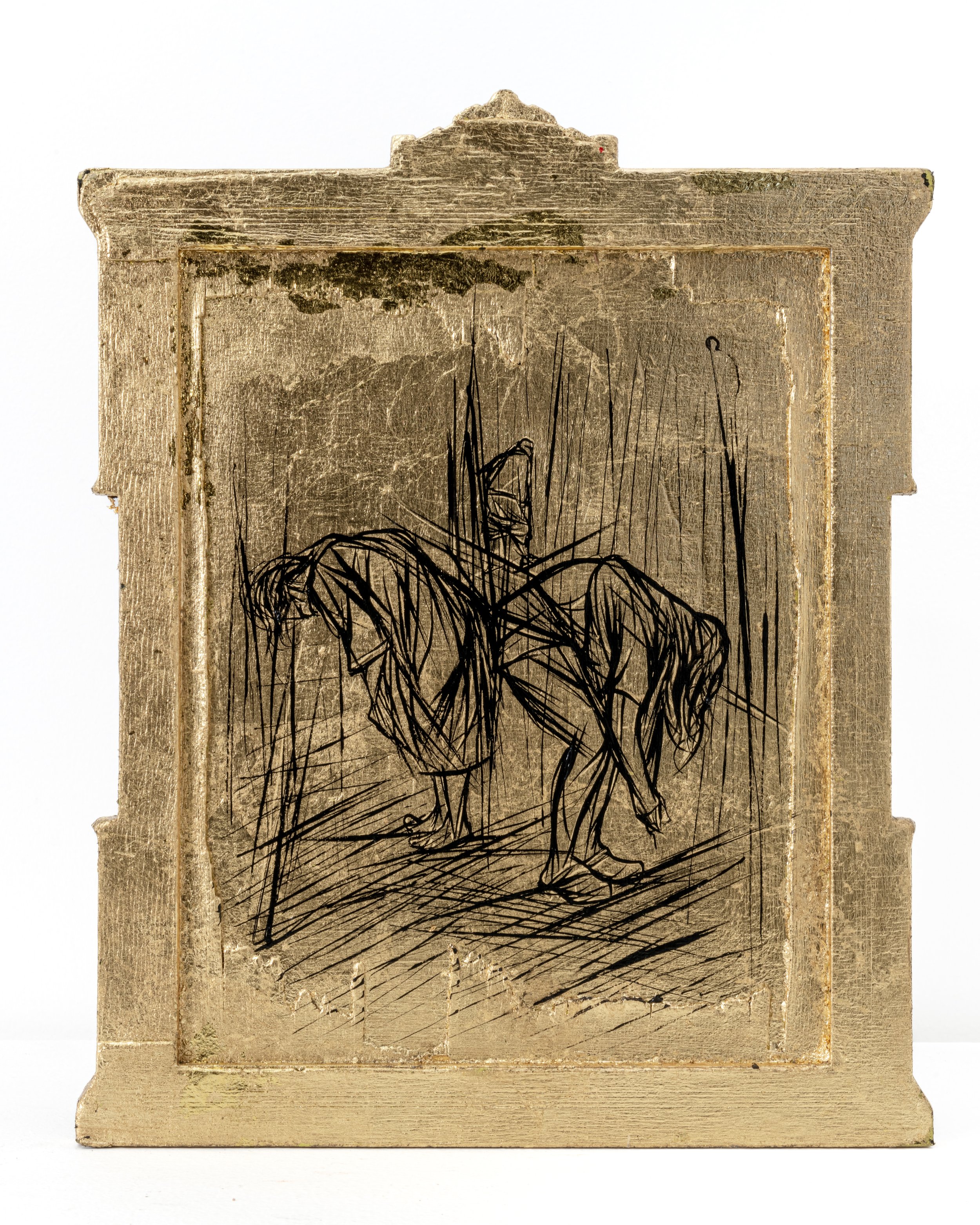
Francesca Bifulco, originally from Pæstum in southern Italy, presents a series of contemporary altarpieces that reimagine traditional religious formats through a personal and interdisciplinary lens. Her work bridges historical iconography with contemporary storytelling, infusing sacred structures with new, often ambiguous narratives.
Rooted in the visual language of Catholic devotion and the theatricality of southern Italian culture, Bifulco’s practice draws on memory, ritual, and mythology to construct layered narrative environments. Her altarpiece format becomes a stage for fragmented stories—at once intimate and archetypal—where figures, symbols, and materials converge in compositions that feel both reverent and subversive. By translating these historical forms into a contemporary context, Bifulco creates works that question belief, authorship, and the persistence of spiritual imagery in a secular age.
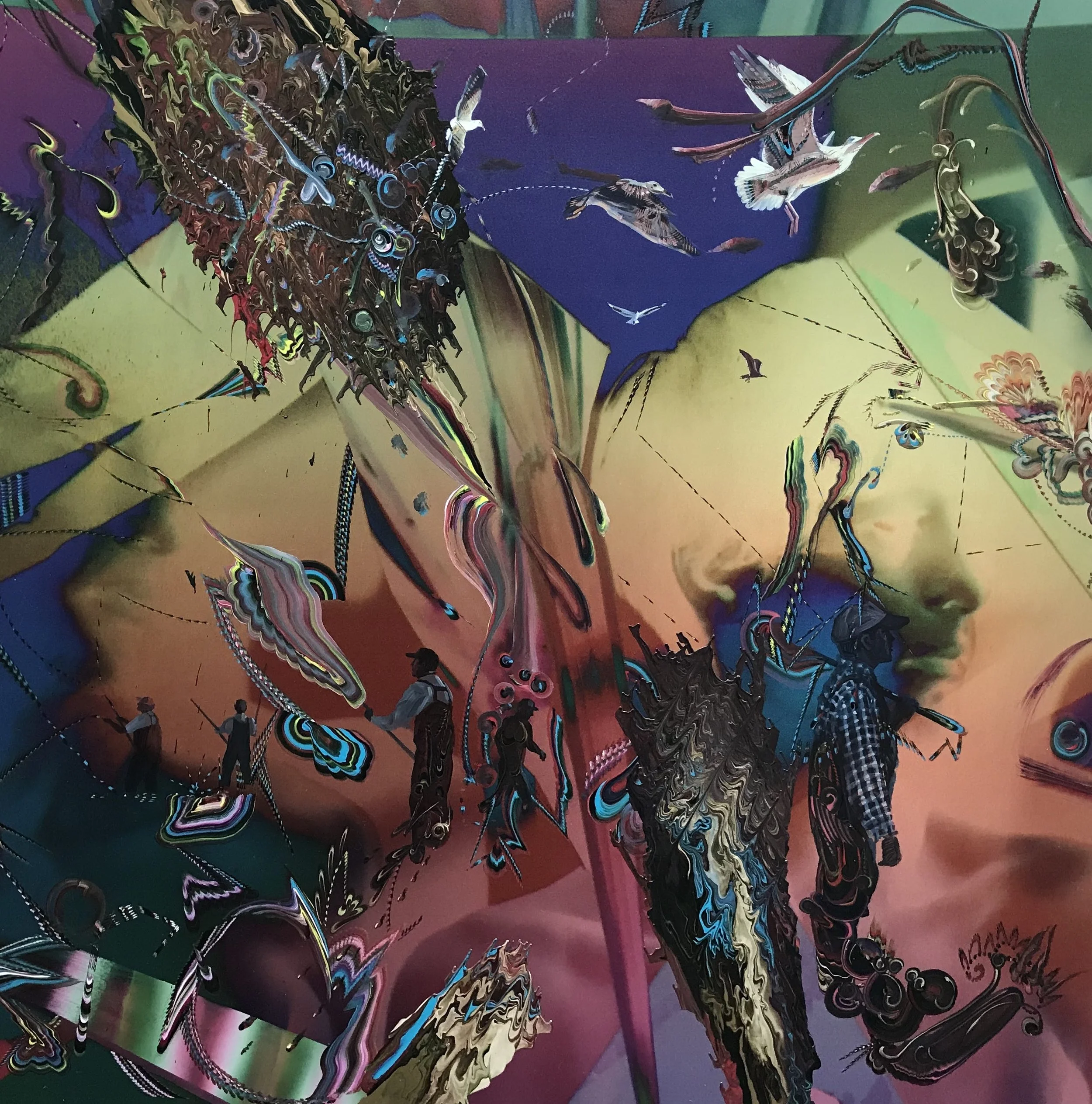
Gegam Kacherian, born in Armenia and now based in Los Angeles, creates richly detailed, dreamlike landscapes that fuse the sublime traditions of 19th-century painting with contemporary fantasy. His compositions—populated by floating figures, animals, and intricate architectural forms—reflect both memory and displacement, shaped by his experience as an immigrant.
Kacherian’s work often unfolds as a series of suspended moments, where time feels both expansive and fractured. Drawing on art historical references ranging from Baroque drama to Romantic landscape painting, he constructs vast, atmospheric worlds that hover between reality and imagination. Within these environments, scale shifts unpredictably—monumental skies dwarf minute, meticulously rendered details—inviting the viewer to move between macro and micro perspectives. This tension between grandeur and intimacy mirrors the psychological terrain of migration, where personal histories are carried into unfamiliar landscapes and reassembled into new, hybrid forms.
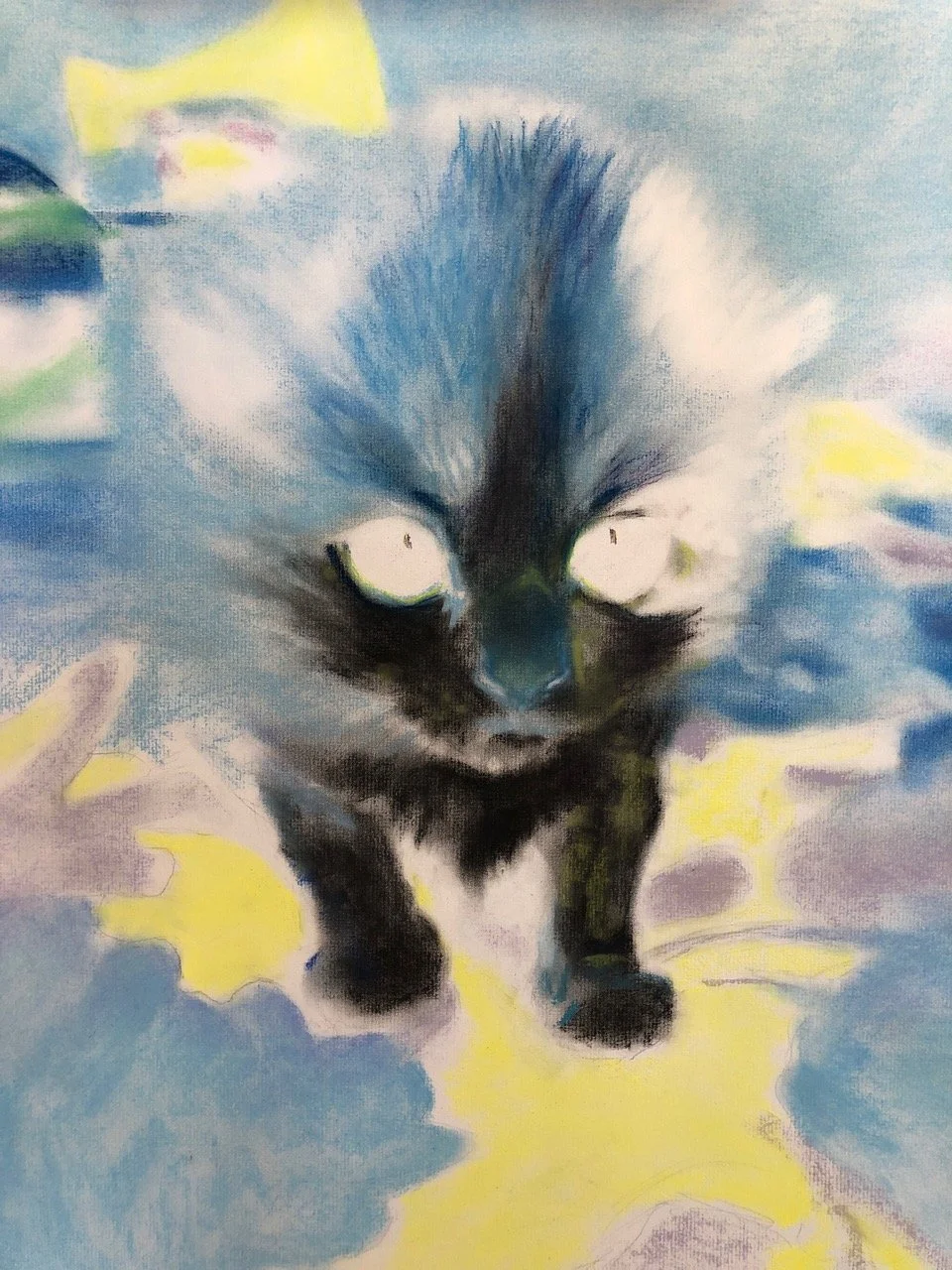
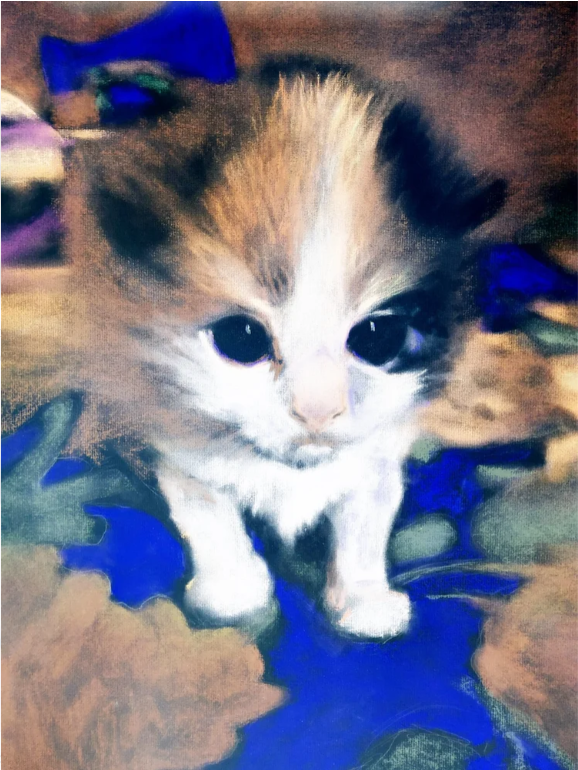
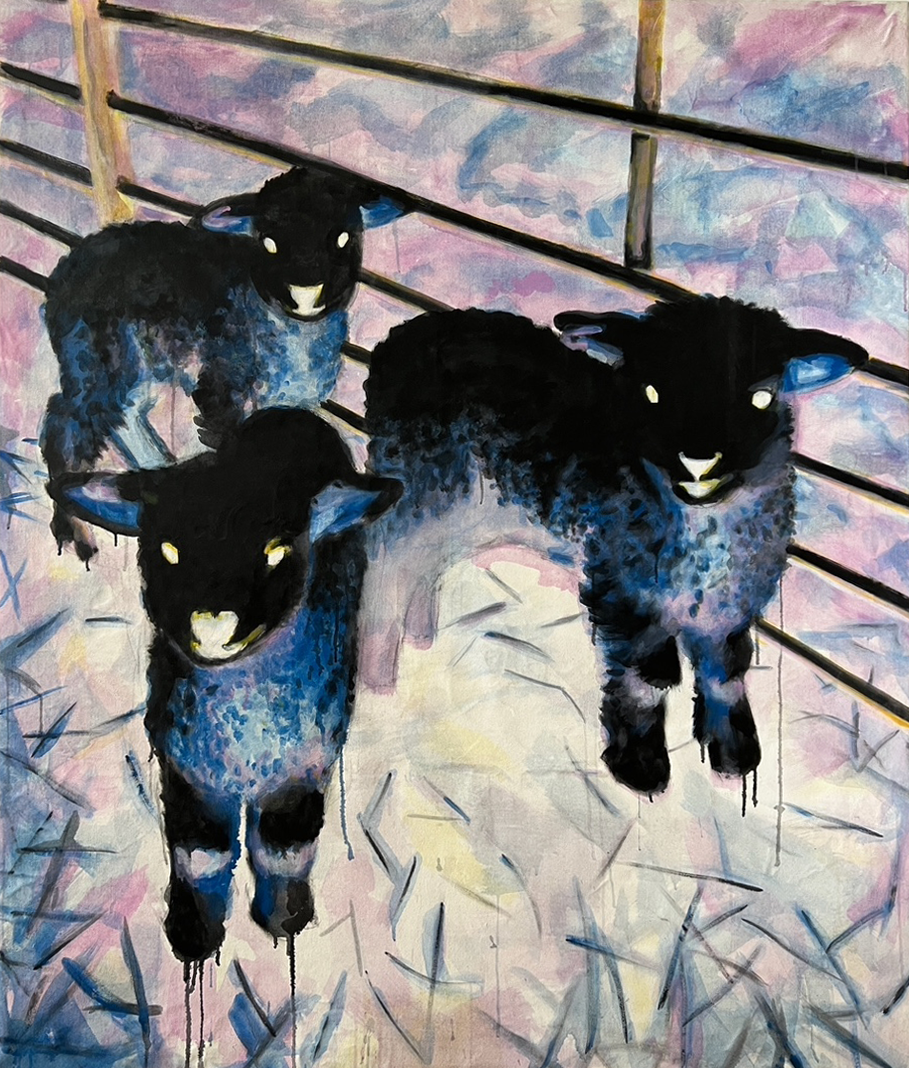
John Geary, originally from New Jersey and a graduate of UCLA’s MFA program, explores themes of mutation and inversion through his “Negative Sheep” series. Beginning with digitally manipulated found imagery, Geary embraces glitches and distortions, transforming them into haunting pastel and painted works that blur the boundary between natural and unnatural forms.
Central to Geary’s practice is a fascination with the unstable nature of the image itself—how reproduction, error, and inversion can generate unexpected meaning. By reversing tonal values and amplifying digital artifacts, he produces figures that feel at once familiar and estranged, hovering between recognition and abstraction. The recurring motif of the sheep—traditionally associated with conformity—becomes, in Geary’s hands, a site of deviation and anomaly. These altered creatures suggest both biological mutation and psychological otherness, positioning the work within a broader dialogue around identity, perception, and the uneasy beauty of imperfection.
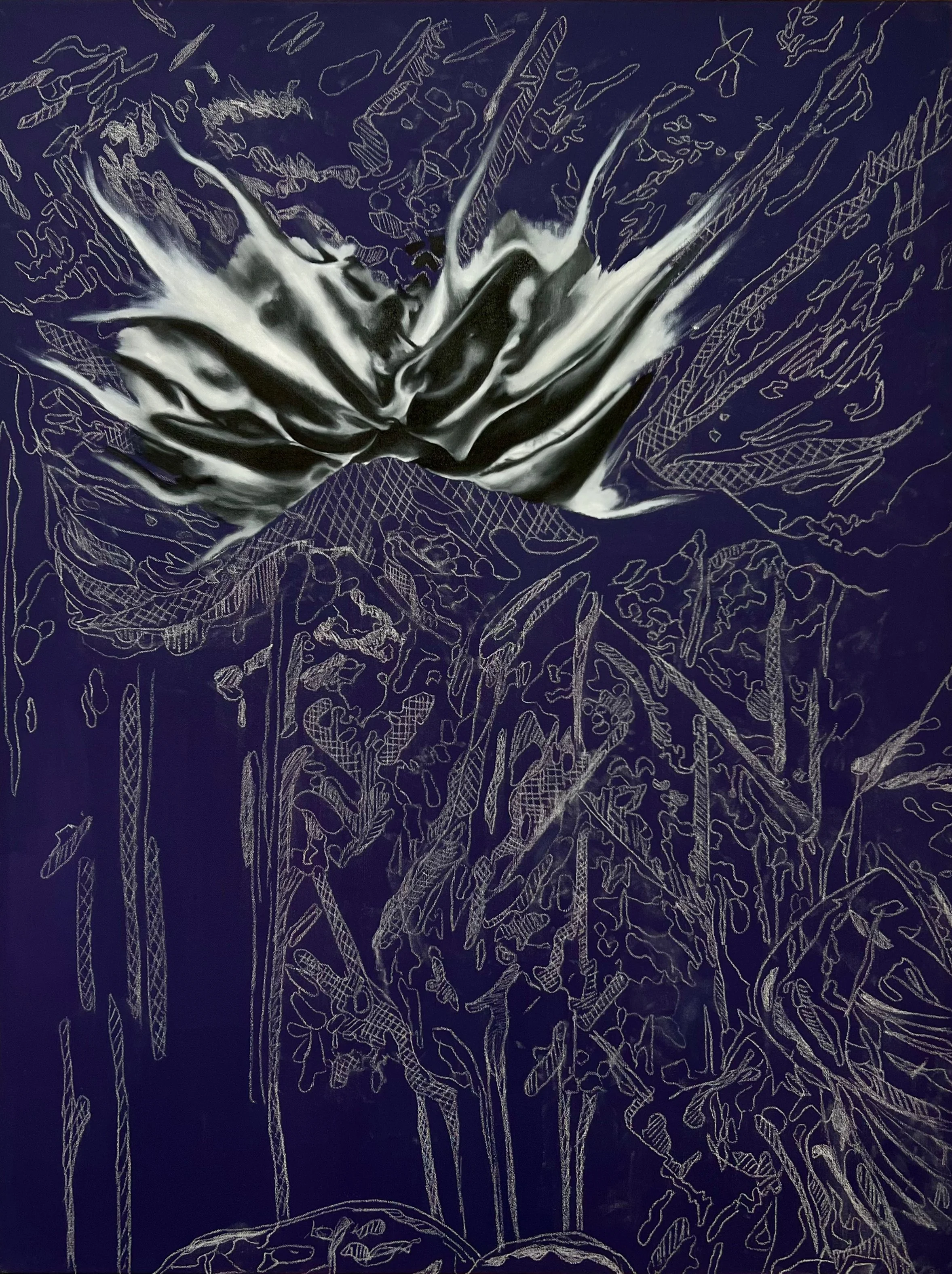
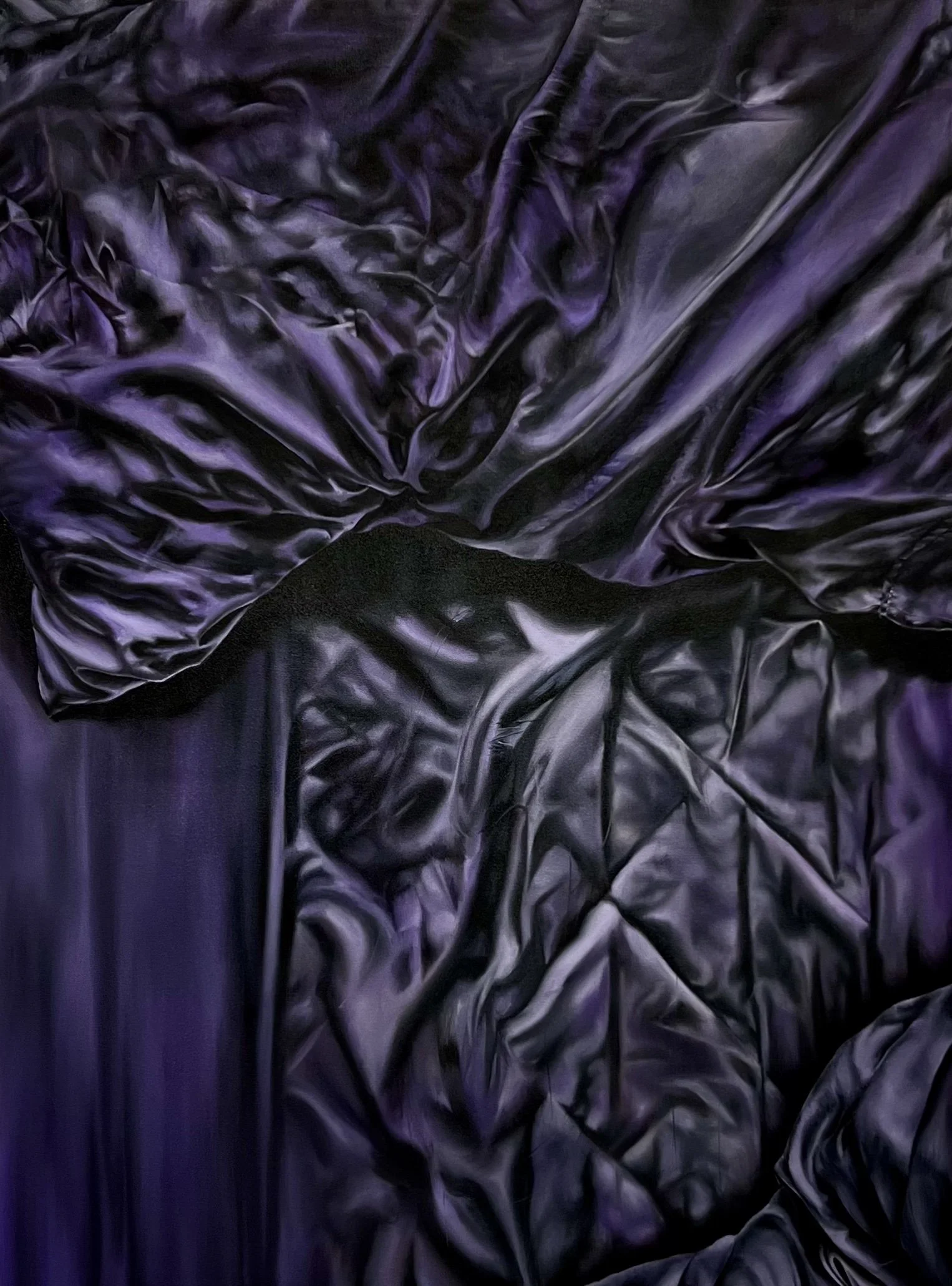
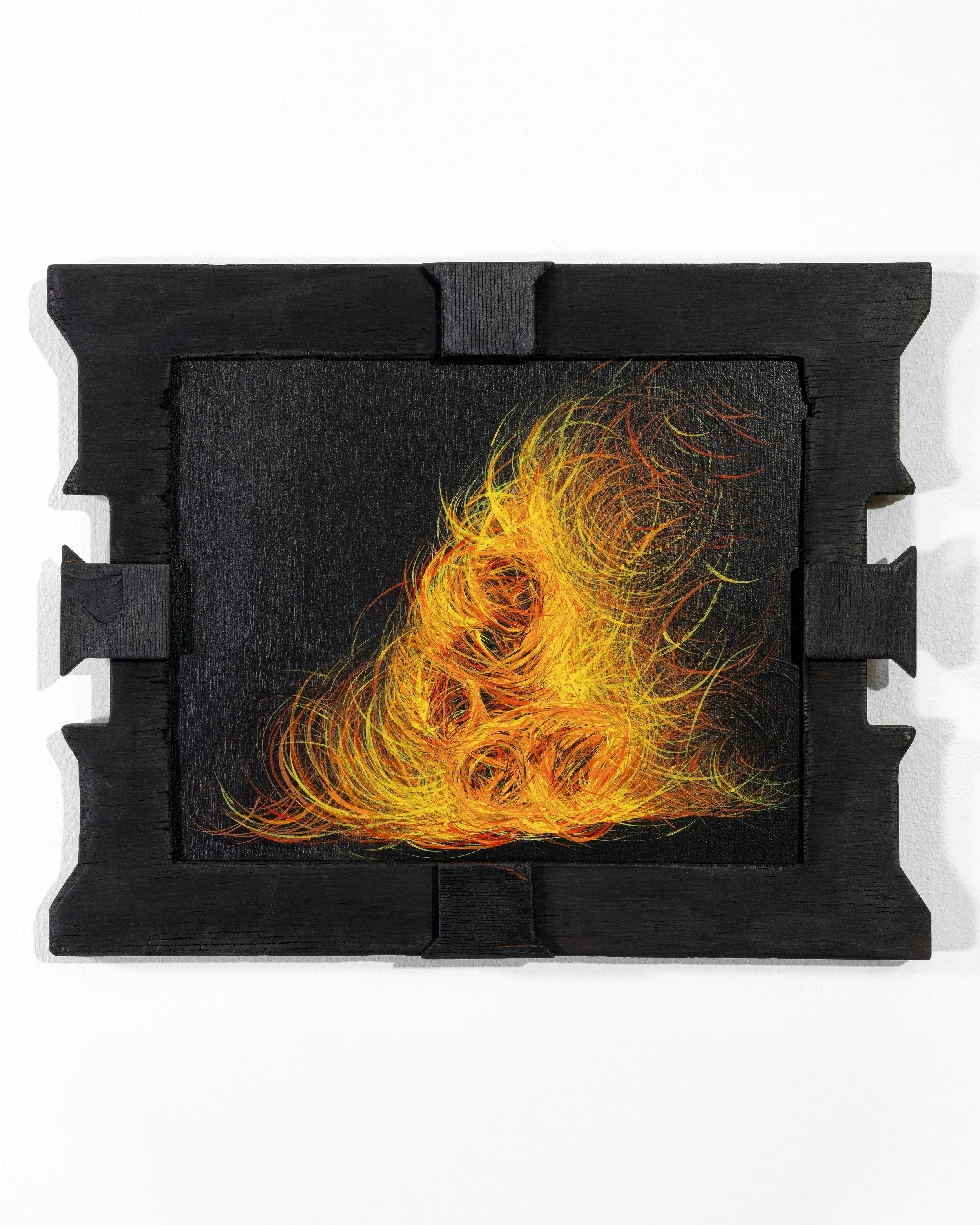
Sara Ajami, an artist and MFA candidate at Claremont Graduate University, presents highly rendered paintings of fabric that oscillate between realism and abstraction. Her work invites viewers into ambiguous spaces where surface and depth collapse, prompting questions about what lies beneath the visible image.
Ajami’s meticulous approach to painting transforms fabric into a subject of psychological and perceptual inquiry. Depicting folds, drapery, and layered surfaces with striking precision, she creates images that feel almost hyperreal, yet remain elusive in their meaning. The fabric appears as a kind of veil or threshold—suggesting concealment, protection, or transformation—while resisting any fixed narrative. In this tension between illusion and representation, Ajami constructs images that are both seductive and unsettling, where the act of looking becomes an experience of uncertainty and quiet tension.
Together, these artists construct a collective vision of darkness not as absence, but as a generative space—one where imagination, memory, and the subconscious converge. Across the exhibition, darkness emerges as a site of transformation, where familiar forms are destabilized and reconfigured into new and often unsettling narratives. Figures dissolve into landscapes, histories fragment and recombine, and images hover between clarity and obscurity. Rather than offering resolution, the works embrace ambiguity, inviting viewers to navigate a space where meaning remains fluid and open-ended.
Dark Shadows invites viewers to enter a world where the familiar becomes strange, and where narrative unfolds in unexpected and often disquieting ways. In doing so, the exhibition foregrounds the enduring power of storytelling—not as a fixed structure, but as a shifting, psychological terrain shaped by perception, memory, and the unknown.